Living room
The indoor olive tree, and the window it demands
An olive lives indoors on one condition — hours of direct sun. What it needs in light, pot and drainage, and why it still beats a fig.
An olive tree is the most honest plant you can bring inside: within a month or two it will tell you how much light your room really has. If it holds its leaves, the room has earned the whole Mediterranean palette around it. If it thins, no styling will compensate.
What is in this room
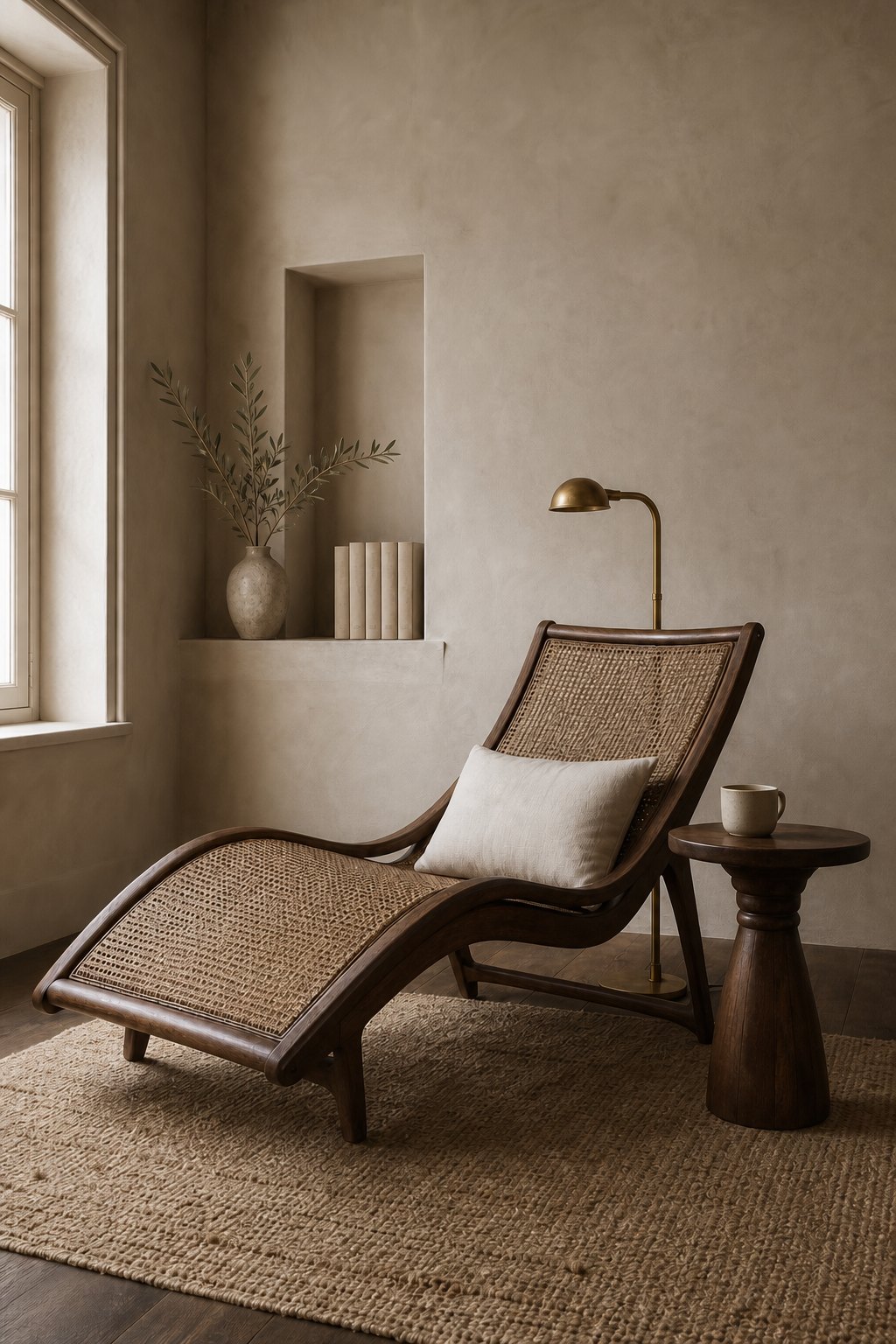
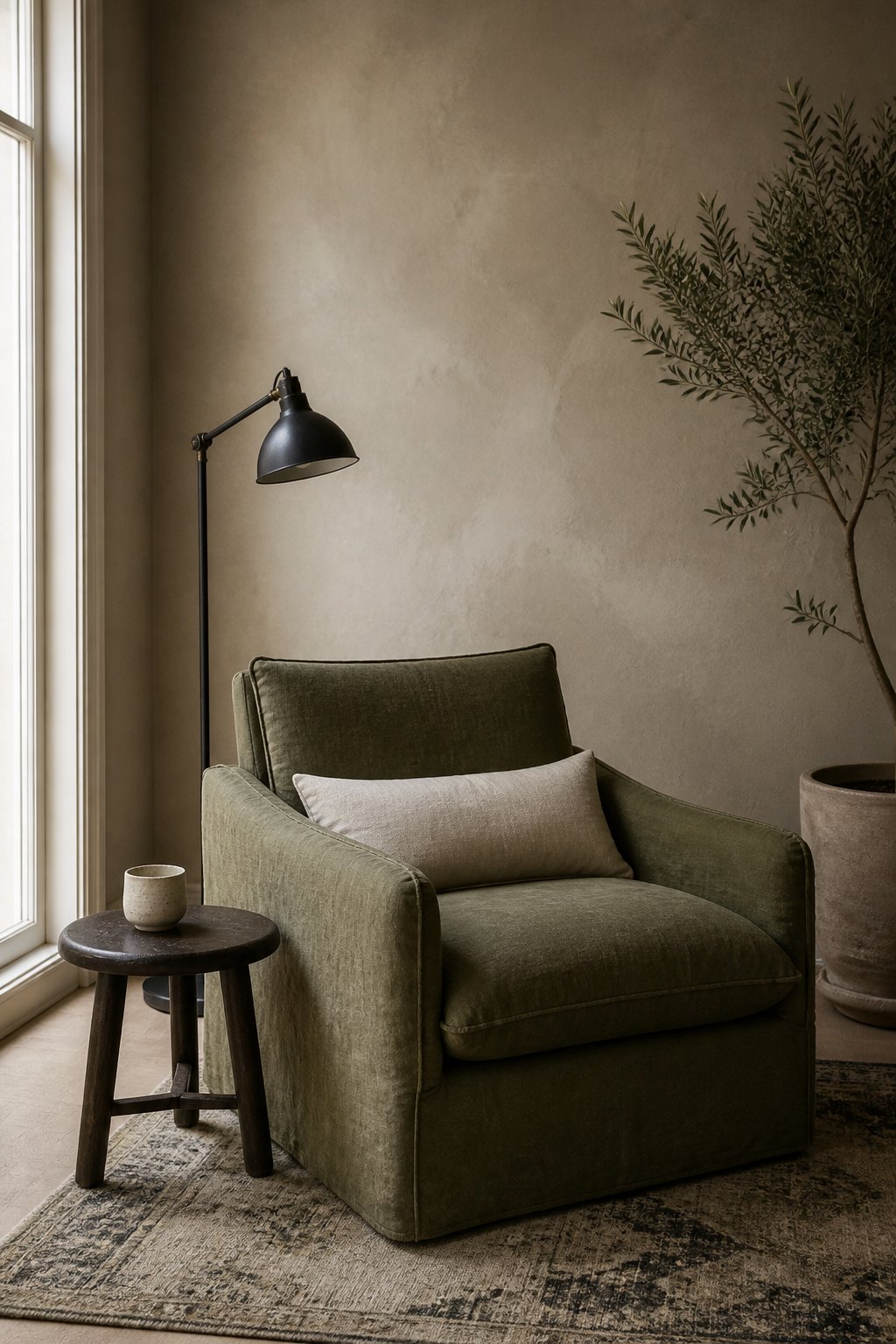
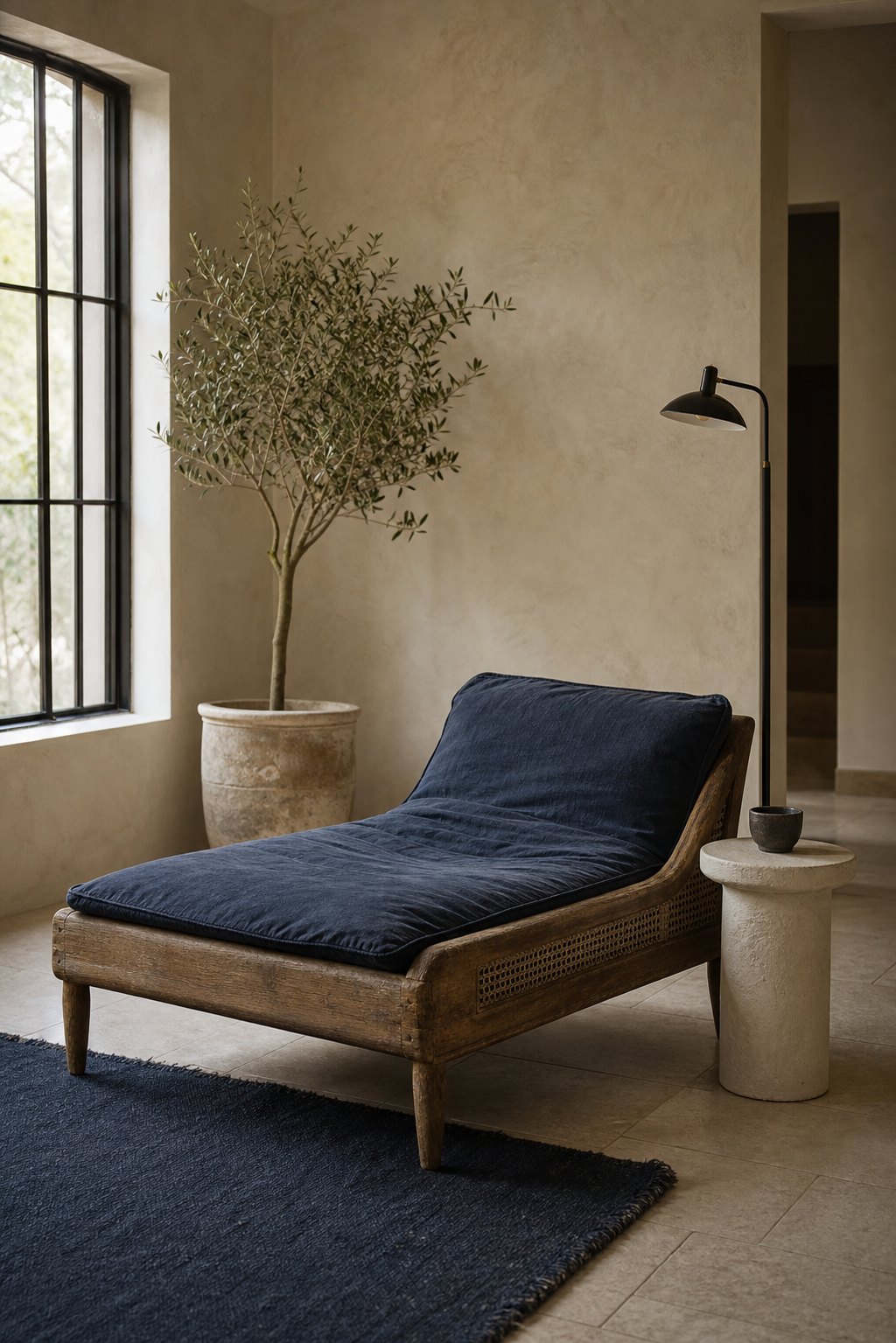
A young olive stands in a large aged pot — terracotta gone pale and chalky, mottled like old limewash — set beside a tall black-framed window. In front of it sits a chaise longue with a weathered oak frame and a caned side panel, carrying a deep navy cushion; a navy flat-weave rug repeats the colour across pale stone tiles. A white plaster pedestal table holds a small dark cup, and a black saucer-shaded floor lamp closes the corner. The walls are warm textured plaster. We argued before that navy fights warm plaster; the olive's grey-green foliage settles the argument, sharing an undertone with both.
What the tree actually needs
- Direct sun, around six hours a day. Not bright indirect light — actual sun on the
leaves, at the brightest, ideally south-facing, window you have.
- A drainage hole, without exception, and a gritty, free-draining compost. Olives
tolerate drought and resent wet feet; a decorative pot with no hole will kill one slowly.
- A pot with real volume and weight. A tree this height wants a substantial pot,
for root run and for stability. Raise it on feet so water clears.
- Restraint with the watering can. Water when the top few centimetres of compost are
dry, and far less in winter.
- A cool, bright winter. Keep it near the glass, away from radiators; olives take cool
air far better than tropical plants do.
Why it beats a fiddle-leaf fig here
The fig wants stable warmth, no draughts, and bright light that is never harsh — and it drops leaves in protest at any change. The olive tolerates dry central-heated air, cool windows and the direct sun that would scorch a fig. Its failure mode is the same: leaf drop, from low winter light or overwatering. Some shedding is normal; a steady thinning means the light is not enough, and the answer is a brighter window, not more water.
An olive does not want the corner. It wants the glass.
Getting the look
Buy a tree with a clear single trunk and an open head. The pot matters as much: aged or limewashed terracotta with a drainage hole, wide enough to give the roots room without swimming. For the seat beside it, look for a chaise with exposed timber and caning — the open weave keeps a large piece light against stone floors — and a loose cushion in a washed navy linen.
The photograph above is a rendered concept image, not a photograph of a real room. See our affiliate disclosure.