Reading corner
Where to put a chaise longue so it gets used
Most chaises end up as expensive laundry shelves. The fix is light, and it is not decorative.
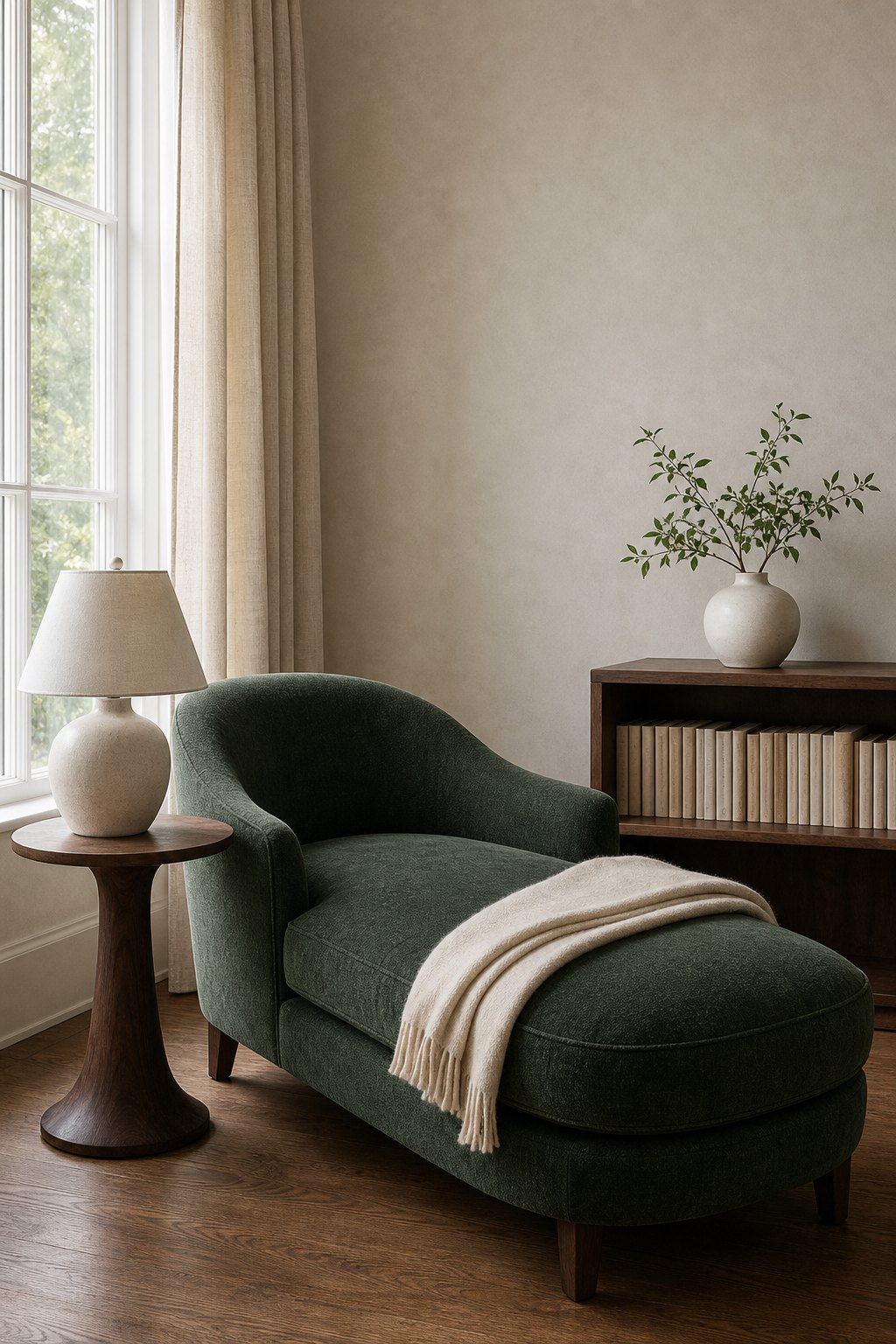
A chaise longue fails for one reason: it gets placed where a sofa would go, against a wall, facing a television. Nobody lies down to watch television in a formal position. It becomes a shelf.
What makes this corner work
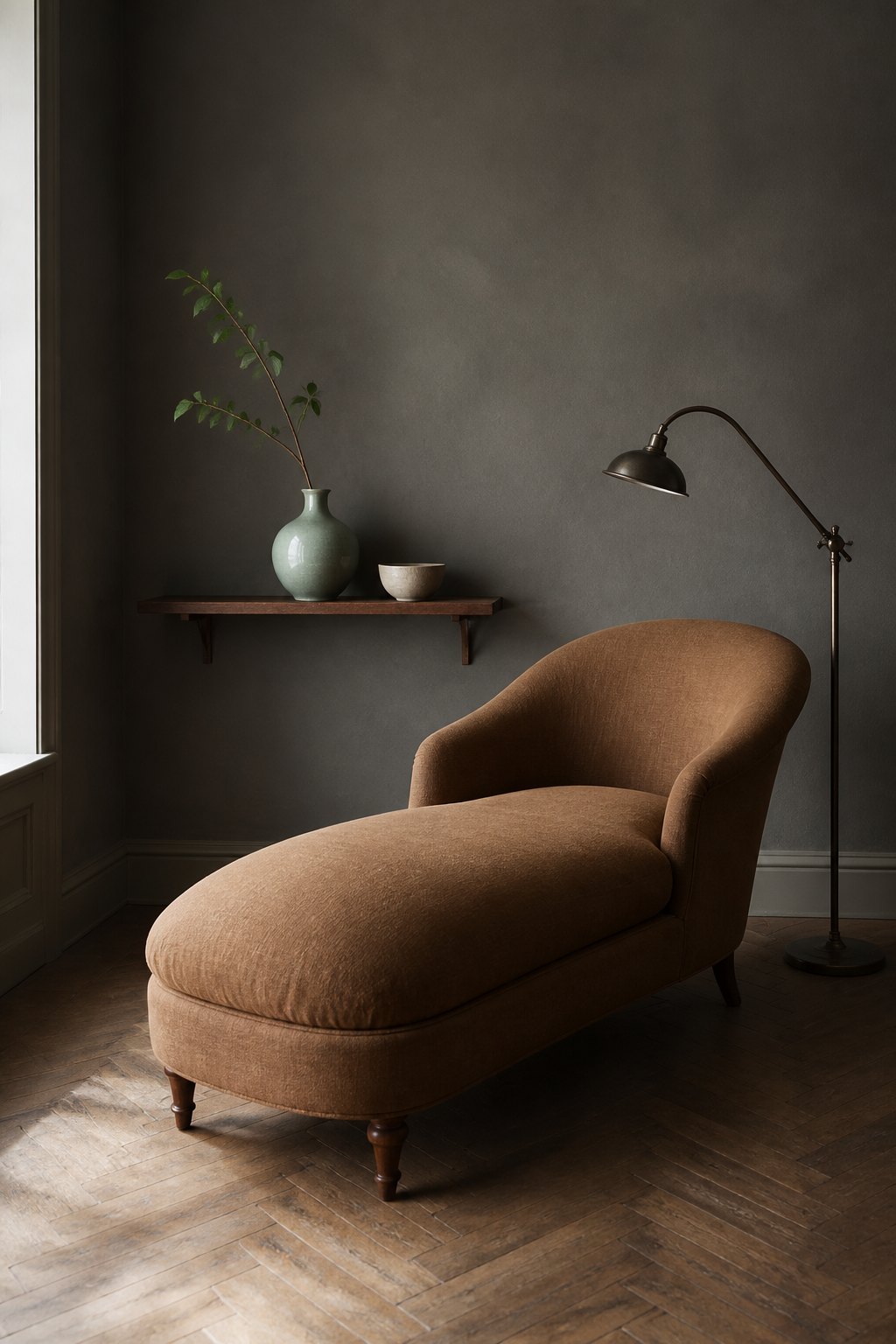
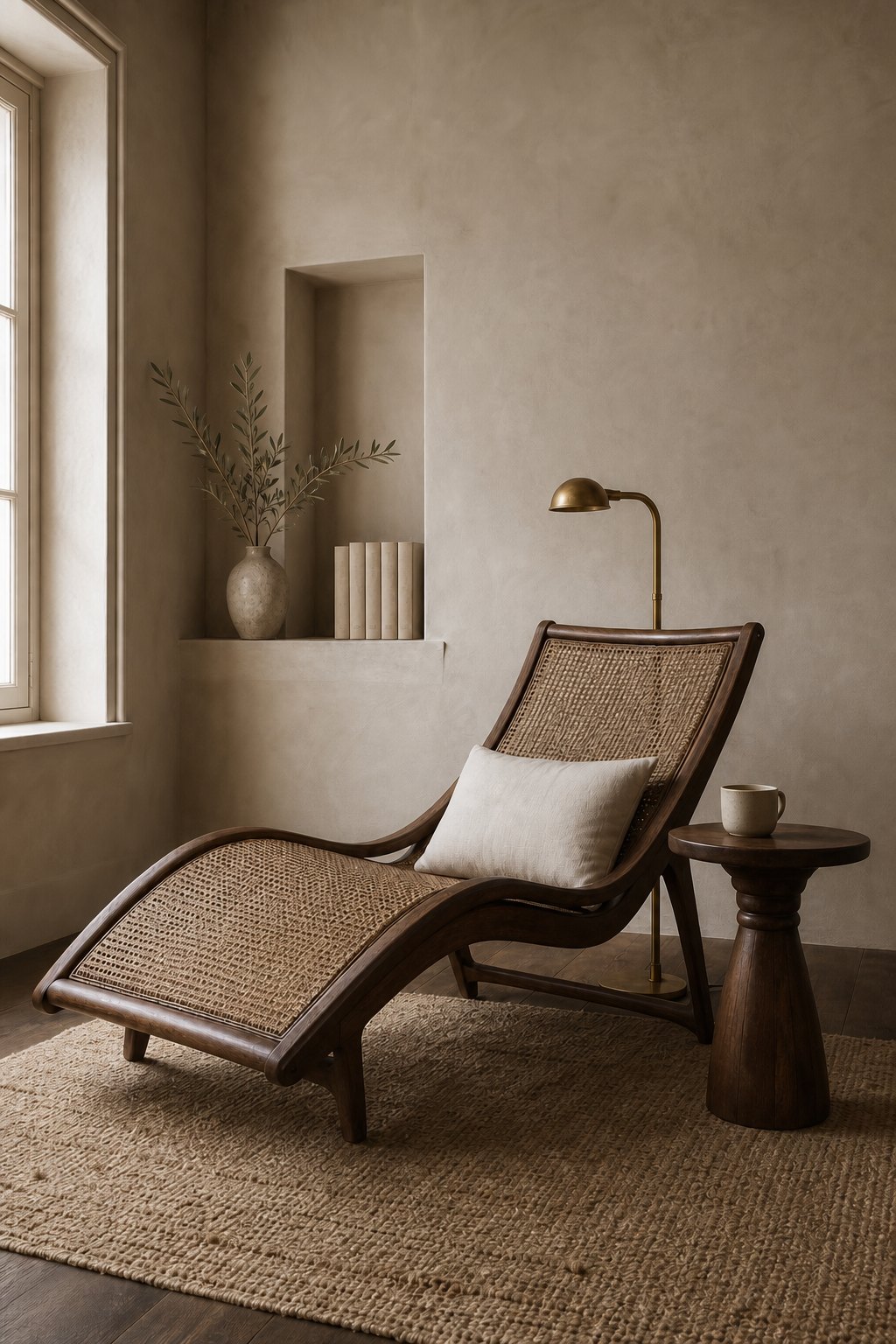
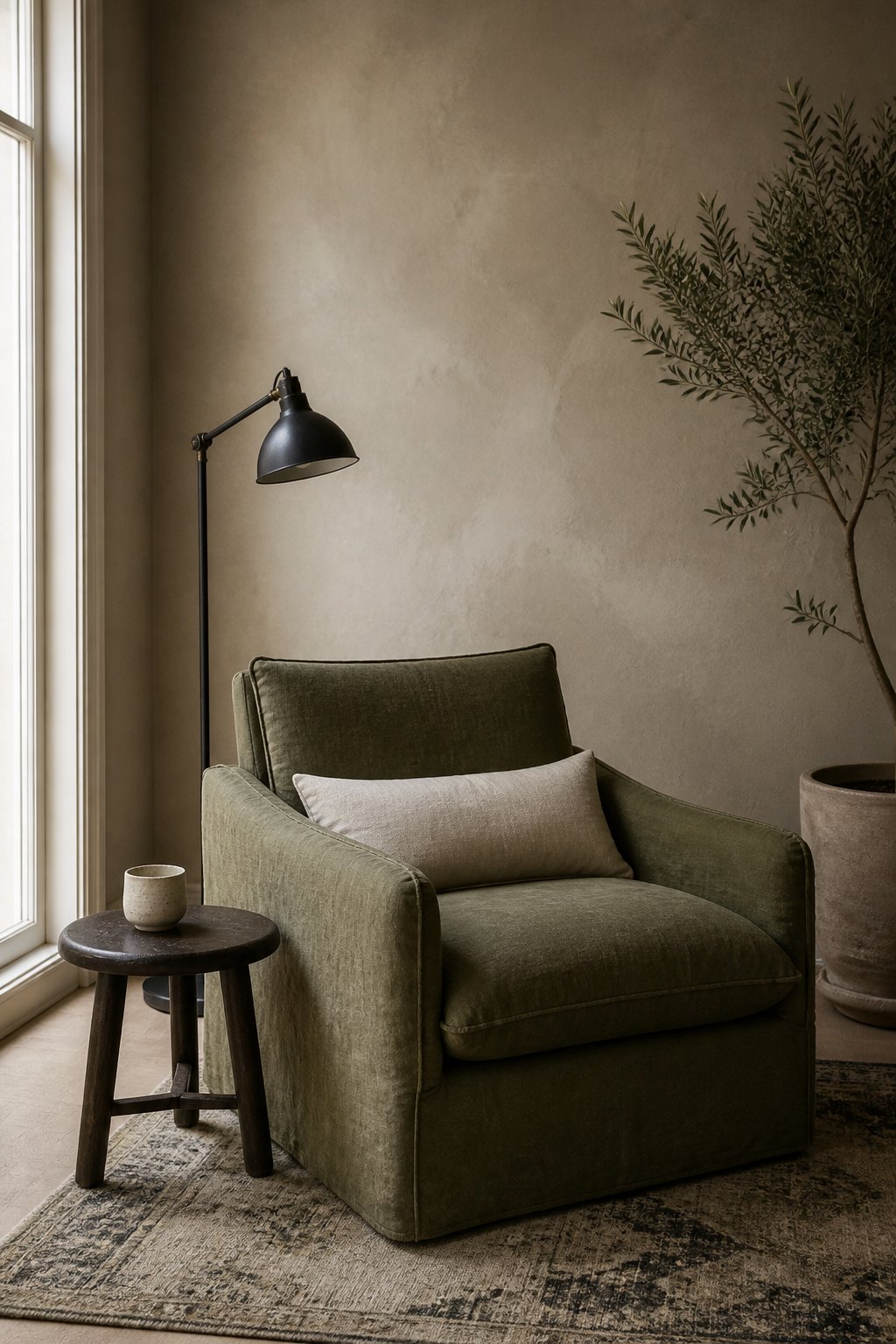
Deep green velvet, a curved back, dark wood legs. It sits perpendicular to the window, not against the back wall — so the light falls across the length of it rather than into your eyes. A round walnut side table sits at the head end at roughly seat height, holding a ceramic lamp with a broad linen shade. A low bookshelf closes the corner behind.
That arrangement is the whole trick. Light from the side, a surface at the head, something to read within reach.
The three requirements
- Light from the side or behind. Facing a window means squinting.
- A surface at the head end, at seat height. Not coffee-table height — you should be
able to put a cup down without sitting up.
- A lamp within arm's reach. A chaise used after dark needs its own light, not the
room's.
Miss any one of these and the piece becomes decorative.
On velvet
Cotton velvet marks and shades; polyester velvet does not, and looks it. For a piece placed in direct light, the shading is a feature — it is why velvet reads as expensive. If the room gets hard afternoon sun, expect fading on the exposed side within a couple of years, and rotate the cushion.
Deep green sits comfortably against warm plaster in a way that navy does not — it shares the yellow undertone rather than fighting it.
Getting the look
The colour to look for is a muted forest, not emerald — greyed enough to sit beside warm white without vibrating. Legs in walnut or stained beech. Keep the side table small and round; a square table at the head of a curved chaise looks like an accident.
The photograph above is a rendered concept image, not a photograph of a real room. See our affiliate disclosure.