Dining room
Round tables seat more people than you think
A 120cm round top seats six. The same footprint as a rectangle that seats four.
A rectangular table has fixed places. A round table has a circumference, and a circumference can be divided as many times as the chairs allow. This is why round tables are the correct answer in almost every room under about twenty square metres.
What is in this room
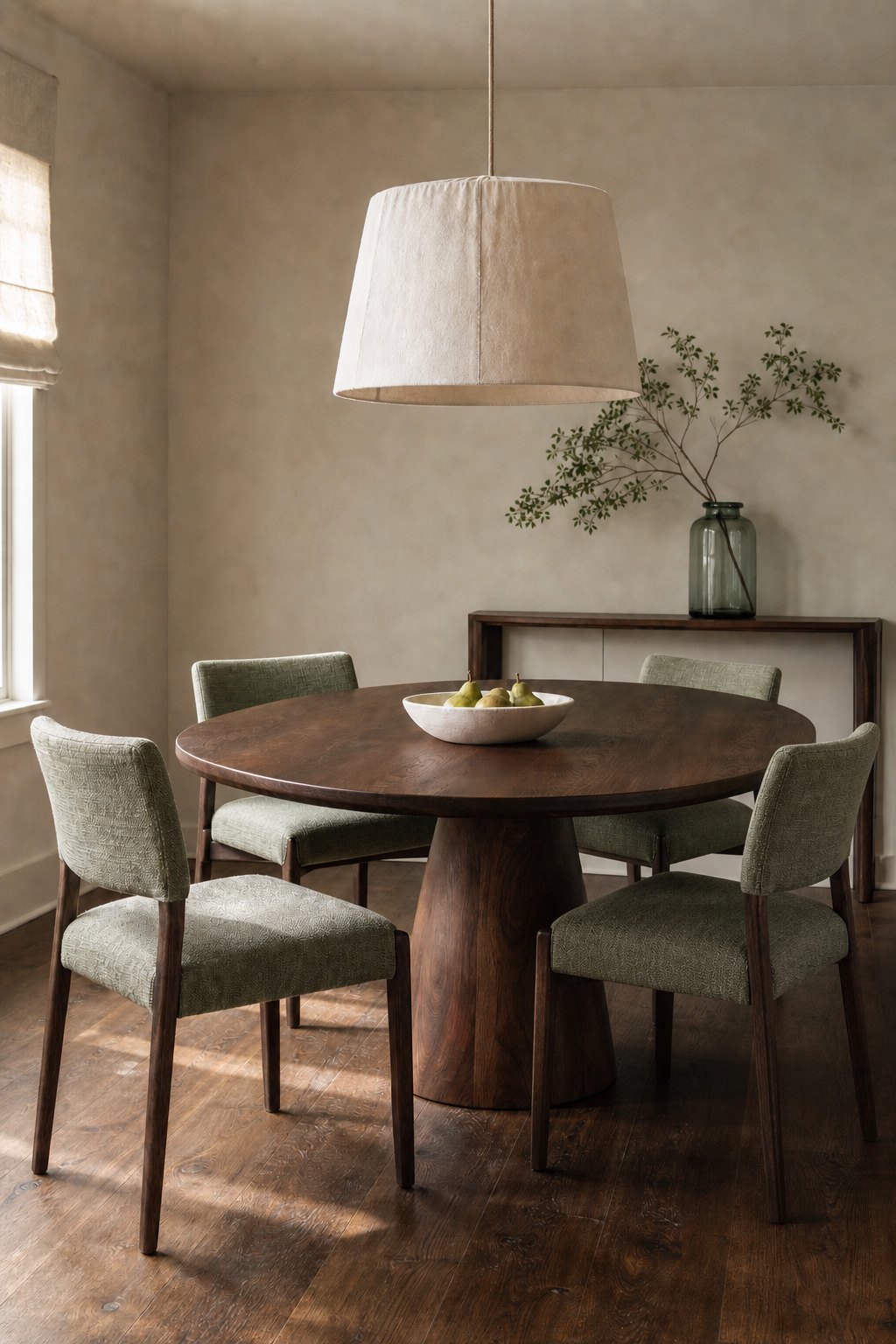
A round table in dark stained oak on a solid pedestal base. Four upholstered chairs in a muted sage, with plain tapered legs. A large linen drum pendant hanging low. A sideboard behind, olive branches in a glass vessel, and a shallow bowl of pears on the table.
The pendant is the piece doing the most work and it is the one people get wrong.
Sizing, honestly
- 90cm — four people, tight. Fine for two who occasionally host.
- 110–120cm — six at a push, four in comfort. The best size for most rooms.
- 135cm+ — genuinely six to eight, but you will struggle to reach the middle.
Allow 90cm of clear floor around the table for chairs to pull out. That figure, not the tabletop, determines whether a room can take it.
The pendant rule
Hang the bottom of the shade 75–85cm above the tabletop. Higher and it stops being intimate; lower and people cannot see each other. The shade should be roughly one third to one half the table's diameter — over a 120cm table, that is a 40–60cm shade. The one here is at the generous end, which is why the room reads as considered rather than under-lit.
A pedestal base is worth paying for. Four legs on a round table means somebody always gets a leg between their knees.
On upholstered dining chairs
They are more comfortable and they are a commitment. Look for removable, washable covers or a performance weave. Sage and other muted greens hide more than cream and read softer than grey.
Getting the look
Dark stained oak or walnut for the top, a pedestal base, and a linen or paper drum shade sized to at least a third of the diameter. Keep the tabletop nearly empty — one bowl, one thing growing.
The photograph above is a rendered concept image, not a photograph of a real room. See our affiliate disclosure.