Reading corner
Take the wingback out of the library
The wings were draught-proofing for unheated halls. The job is gone; the shape still earns a corner, if you keep it out of the club.
The wingback is the oldest armchair silhouette still in mass production, and it began as engineering, not style. The wings were there to trap the heat of an open fire and deflect the draughts of an unheated hall away from the sitter's head. Central heating abolished the job about a century ago. The shape survived because it turned out to do something else well.
What is in this corner
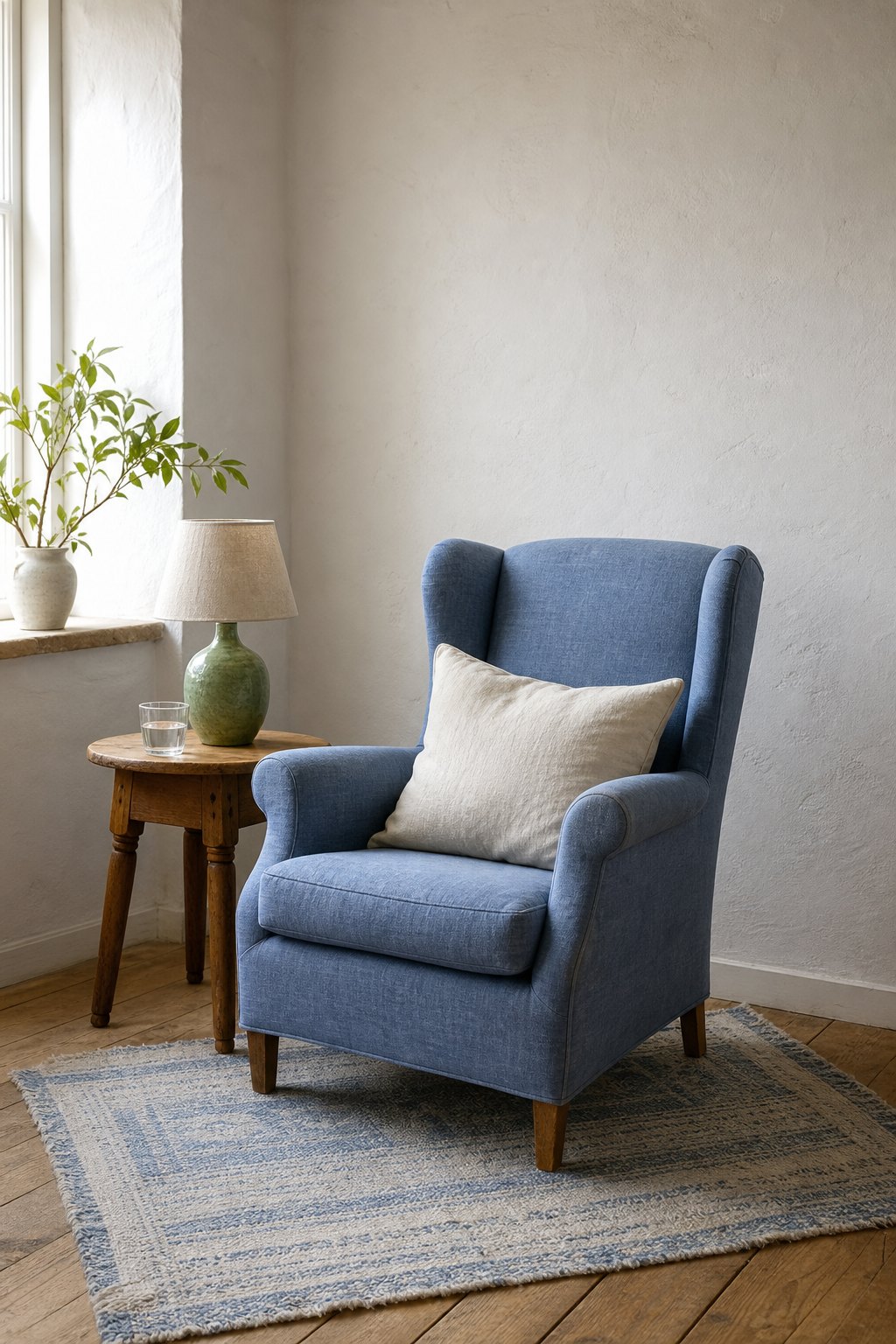
A cornflower-blue wingback in a washed linen weave — rolled arms, a loose seat cushion, a generous cream linen cushion against the back, and exposed tapered wooden legs. Beside it, a small round side table in aged, honey-toned wood with turned legs, carrying a glass of water and a lamp with a mottled green ceramic base under a natural linen shade. A leafy branch in a cream jug sits on the stone windowsill to the left, which is where the daylight comes from. Underfoot, a fringed flat-weave rug, cream with a pale blue border, laid over wide old floorboards. The walls are rough white plaster and carry nothing.
What the wings were for
Seventeenth-century rooms were heated by one fire and ventilated by every door. The wings wrap at exactly head height because that is where a draught is felt most. The modern job uses the same geometry for a different purpose: the wings now block sightlines and peripheral movement rather than wind. Sit in one and the room narrows to whatever is in front of you. That makes it a poor chair for conversation and an excellent chair for reading — which is why it belongs in a corner, not in the middle of a seating group.
A wingback is a room within a room. Put it where you want to disappear.
Keeping it off the club floor
Stuffiness is not built into the shape. It comes from three decisions, all avoidable. Colour first: oxblood or bottle-green leather with nailhead trim is the gentleman's-club uniform, while a chalky blue on white plaster reads light. Fabric second: a washed linen or flat weave, never velvet. Legs third: exposed and tapered, as here — a skirted base adds visual weight the tall back does not need. If leather is the point, buy the club chair instead; it wears the material better.
- Seat height 450mm — the standard, and worth checking, as traditional frames run low.
- Side table at or just below arm height, close enough to reach without leaning.
- Bottom of the lampshade at seated eye level, so the bulb never sits in view.
- Front legs on the rug, at minimum. A chair floating entirely off it looks parked.
Getting the look
Look for a frame around waist-high at the arms with wings that curve forward rather than flare, a feather-wrapped foam seat cushion, and legs in a mid-tone wood. Linen-cotton blends wear better than pure linen on a seat. The blue should be greyed, not primary — anything brighter fights the plaster instead of resting against it.
The photograph above is a rendered concept image, not a photograph of a real room. See our affiliate disclosure.